

-
About Us
-
Functional Module
-
Service and Support


Professor Zhang Jincheng and Professor Ning Jing from the team of Academician Hao Yue at Xidian University have made breakthrough progress in the field of diamond-based gallium oxide thermal management.
Category:
Industry News
Author:
Source:
Release time:
2025-09-01
Visits:
Semiconductor Industry Network learned: Recently, a research team from Xidian University made a breakthrough in the field of wide bandgap semiconductor material integration through technical research. The related results were published online on August 31, 2025, in "Nature Communications" under the title "Van der Waals β-Ga 2 O 3 thin films on polycrystalline diamond substrates" (DOI: 10.1038/s41467-025-63666-x). The study successfully achieved high-quality β-Ga 2 O 3 film and effective integration with high thermal conductivity polycrystalline diamond substrates, providing a new approach to solving the thermal management challenges of gallium oxide-based electronic devices. The research was completed by the team led by Academician Hao Yue, Professor Zhang Jincheng, and Professor Ning Jing from Xidian University. Professor Zhang Jincheng is the corresponding author, Professor Ning Jing is the first author, and master's student Yang Zhichun is a co-first author.
Gallium oxide (β-Ga₂O₃) is regarded as a core material for next-generation high-power and optoelectronic devices due to its ultra-wide bandgap, high breakdown field strength, and low-cost crystal growth advantages. However, its intrinsic thermal conductivity is extremely low, only about 1/5 that of silicon, leading to severe self-heating effects and rapid reliability degradation. Introducing diamond with high thermal conductivity as a heat dissipation substrate is currently the most promising thermal management strategy. Although single-crystal diamond substrates have excellent thermal conductivity, their wafer size is limited and preparation costs are high, restricting large-scale industrial application. Therefore, achieving high-quality β-Ga 2 O 3 epitaxy on polycrystalline substrates has become a more feasible technical path but still faces key challenges such as crystal orientation disorder, numerous interface defects, and thermal stress accumulation.
This study reveals the intelligent selection of β-Ga 2 O 3 nucleation orientation and efficient stress release on polycrystalline substrates assisted by two-dimensional materials. By introducing graphene as a lattice decoupling layer, the lattice mismatch effects caused by the orientation disorder of the polycrystalline diamond substrate are effectively shielded. Using weak interface coupling and lattice mismatch coefficient-oxygen surface density regulation (The oxygen-lattice co-modulation model), controllable epitaxy of (-201)-oriented β-Ga₂O₃ films was successfully achieved, breakthrough clarifying the physical mechanism of single-crystal film growth on polycrystalline substrates assisted by two-dimensional materials.
This study uses a graphene layer to release tensile stress at the interface caused by a large thermal mismatch coefficient, significantly reducing interface thermal resistance. Experiments measured the thermal boundary resistance of the β-Ga 2 O 3 /diamond interface to be only 2.82 m 2 ·K/GW, which is an order of magnitude lower than existing technologies. Photodetectors based on this van der Waals heterostructure exhibit a high photo-to-dark current ratio of 10 6 and a responsivity of 210 A/W, confirming its significant advantages in thermal management and optoelectronic performance. This breakthrough provides a new solution for the thermal management challenges of gallium oxide-based high-performance power electronic devices, achieving efficient integration of high thermal conductivity substrates with ultra-wide bandgap semiconductors, and is of great significance for promoting the development of next-generation high-power devices.
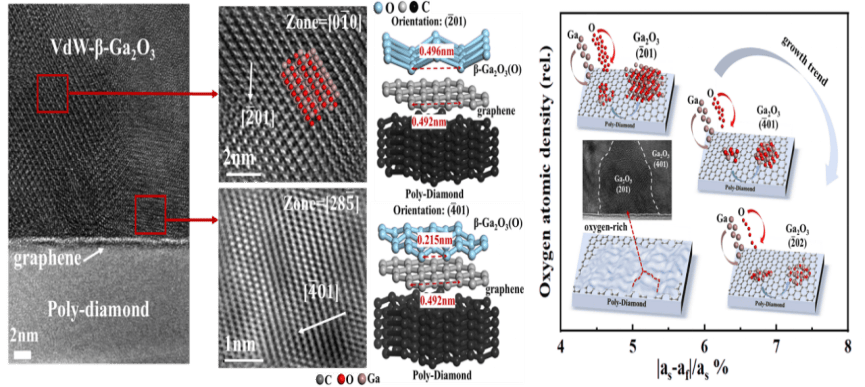

Figure 1 Gallium oxide epitaxial material and regulation model based on graphene interlayer
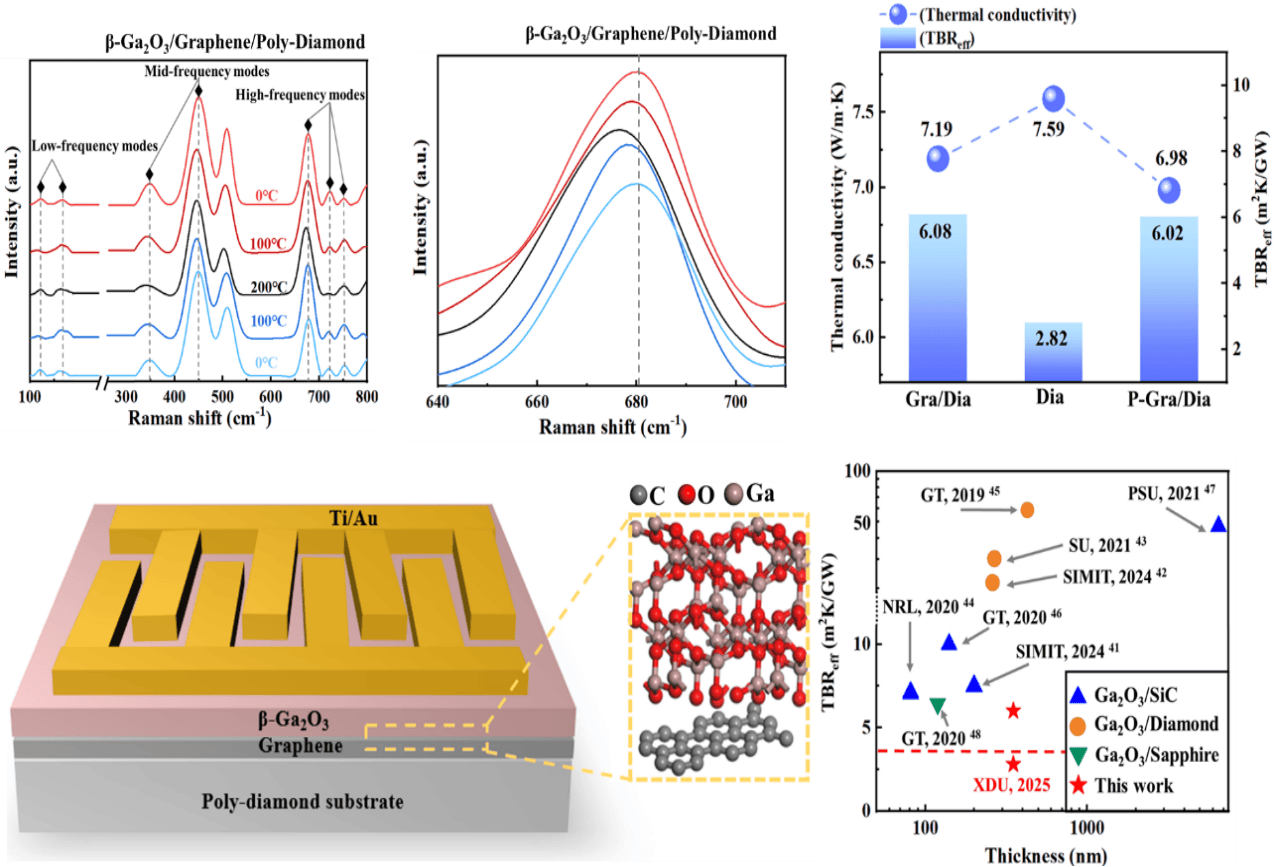

Figure 2 Graphene's role in thermal stress release and thermal resistance reduction
Paper link: https://www.nature.com/articles/s41467-025-63666-x#article-info
Related News

2025/03/05
Technical Support Hotline
E-MAIL:
Technical Support Hotline: 86-13861996325
Address:
4th Floor, Building 5, No. 2 Haiyang South Road, Chengnan Street, Rugao City, Jiangsu Province
Subscribe to us for the latest updates
Mobile Station
WeChat Official Account


Copyright © KOSEN SEMI (JIANGSU) MICROELECTRONICS CO., LTD. All Rights Reserved.